Have you ever enjoyed the sweet, vibrant taste of a persimmon, only to be left with an uncomfortable stomach ache or a strange, dry feeling in your mouth? You’re not alone, and there’s a clear scientific reason behind it. While persimmons are generally a healthy and delicious fruit, understanding their unique properties is key to avoiding digestive discomfort.
This guide will delve into the specific compounds responsible for persimmon-related stomach pain, explain the rare but serious risk of “stomach stones,” and provide practical steps to ensure you can enjoy this seasonal fruit safely and deliciously. Why Persimmons Can Cause Stomach Pain
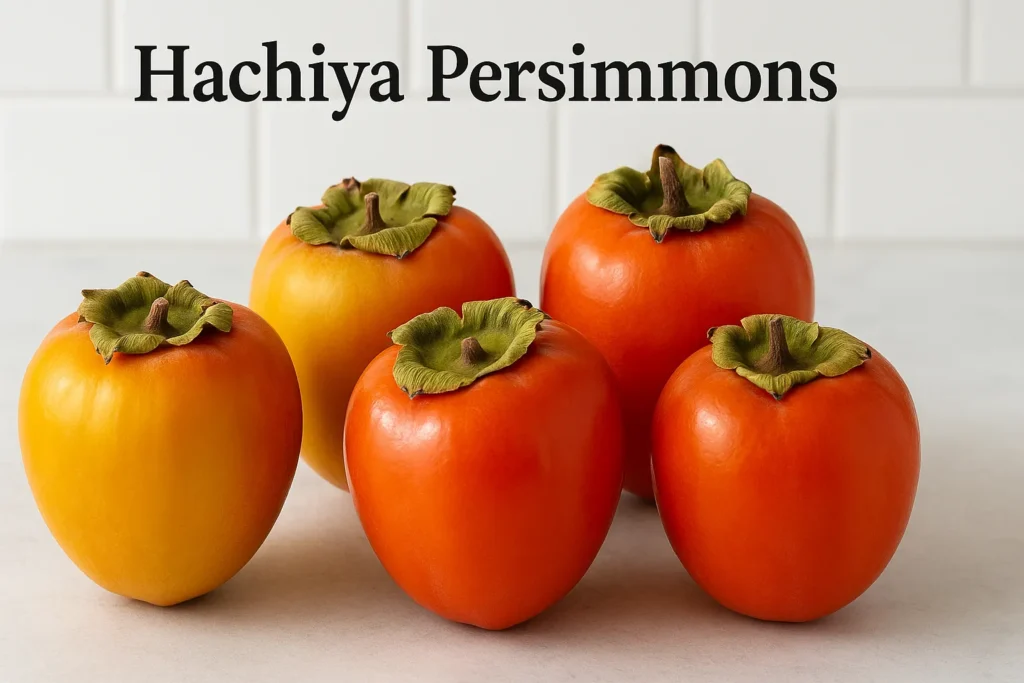
Unripe persimmons, particularly the Hachiya variety, contain high levels of soluble tannins (shibuol). These compounds can react with stomach acid, potentially causing discomfort, indigestion, and, in very rare cases, forming indigestible masses called bezoars, leading to severe abdominal pain or blockages.
Table of Contents
The Main Culprit: Soluble Tannins (Shibuol)
To understand why persimmons can sometimes cause stomach upset, we need to talk about tannins. These are natural plant compounds found in many fruits, teas, and wines, responsible for that dry, astringent sensation.

What are Tannins and Why Do They Cause Discomfort?
Tannins in unripe persimmons are particularly reactive. When they come into contact with the proteins in your saliva and the digestive enzymes in your stomach, they can bind together. This binding action is what creates the strong, unpleasant puckering sensation in your mouth and can contribute to feelings of indigestion or mild stomach discomfort, especially if consumed in large quantities or on an empty stomach.
The Key Difference: Astringent vs. Non-Astringent Persimmons
Not all persimmons cause this issue. The level and type of tannins vary significantly between the main varieties:
- Astringent Persimmons (e.g., Hachiya): These contain very high levels of soluble tannins when unripe. They must be eaten when completely soft and ripe. As they ripen, the soluble tannins convert into an insoluble form, eliminating the astringency and allowing their intense sweetness to shine through. Eating them firm will almost certainly cause discomfort.
- Non-Astringent Persimmons (e.g., Fuyu): These contain lower levels of soluble tannins and are often edible even when firm and crunchy. While they still have some tannins, they generally don’t cause the same strong astringent reaction or digestive upset.
Key Takeaway: The “pucker” is your body’s way of telling you the fruit isn’t ready. For Hachiya persimmons, always wait until they are jelly-soft
Understanding Persimmon Bezoars: The Real Risk
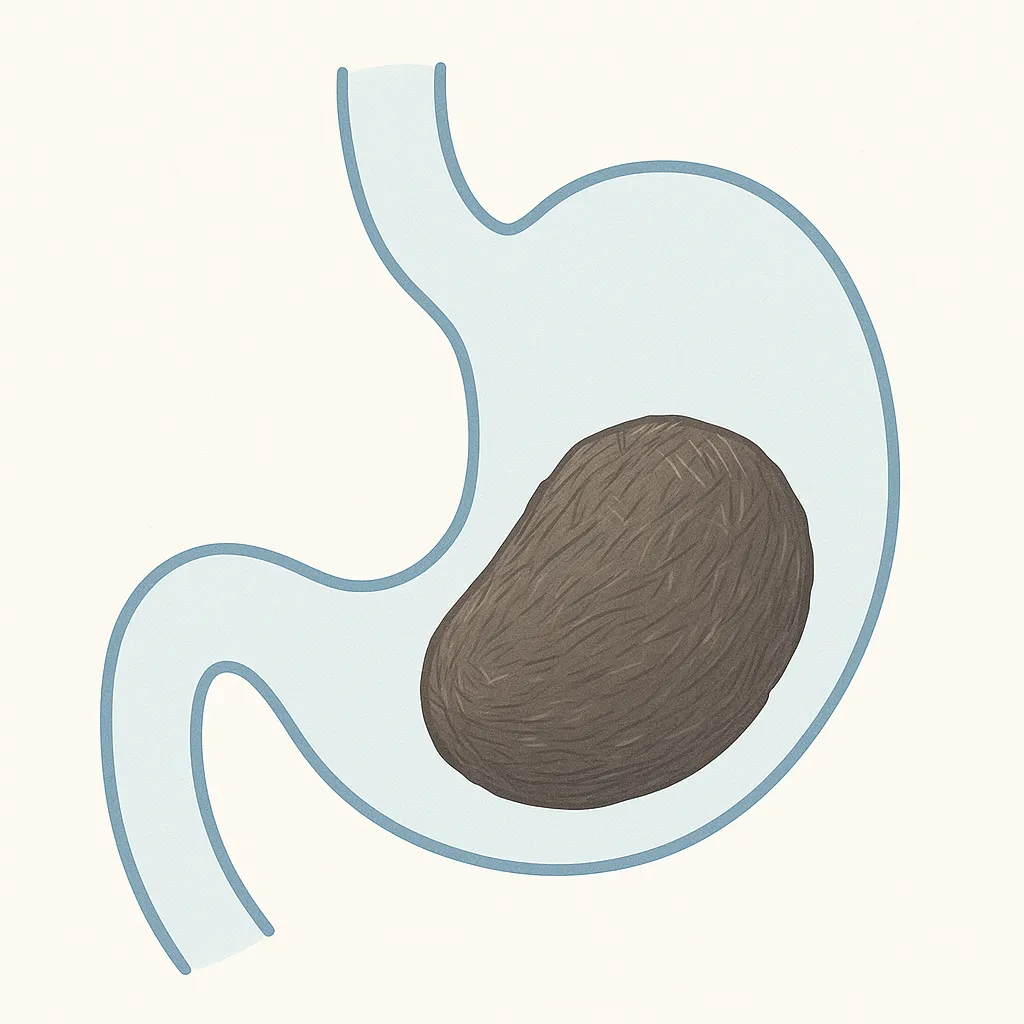
While an upset stomach is temporary, there is a more serious condition linked to persimmons known as a bezoar. Specifically, a “Diospyrobezoar” is a type of phytobezoar (plant fiber stone) caused by consuming unripe persimmons.
What Exactly is a Bezoar?
Think of it as a “stomach stone.” When the high concentration of soluble tannins in unripe persimmons mixes with stomach acid, they can polymerize and form a sticky substance that binds with indigestible plant fibers (cellulose and hemicellulose). Over time, this mixture hardens into a solid mass that cannot pass through the digestive tract.
According to the Merck Manual, persimmons are one of the most common causes of phytobezoars due to this unique chemical reaction.
Who is Most at Risk?
For a healthy individual with normal digestion, eating a ripe persimmon is perfectly safe. However, certain groups are at higher risk of developing these stones:
- People with delayed gastric emptying (Gastroparesis): If food stays in the stomach longer, it has more time to react and harden.
- Previous Gastric Surgery: Individuals who have had stomach surgeries (like gastric bypass or ulcer surgery) often have reduced stomach acidity or motility, making them more susceptible.
- Eating Large Quantities: Consuming several unripe persimmons in one sitting significantly increases the risk.
Symptoms to Watch For
If a bezoar forms, it can cause symptoms such as:
- Persistent abdominal pain or fullness.
- Nausea and vomiting.
- Loss of appetite.
- In severe cases, intestinal blockage.
Important: If you experience severe, persistent stomach pain after eating persimmons, seek medical attention. Bezoars are treatable (often dissolved with Coca-Cola or removed endoscopically), but they require a doctor’s diagnosis.
How to Avoid Persimmon-Related Stomach Issues
The good news is that you don’t need to stop eating persimmons. You just need to eat them correctly. Follow these simple rules to enjoy the fruit without the tummy ache:
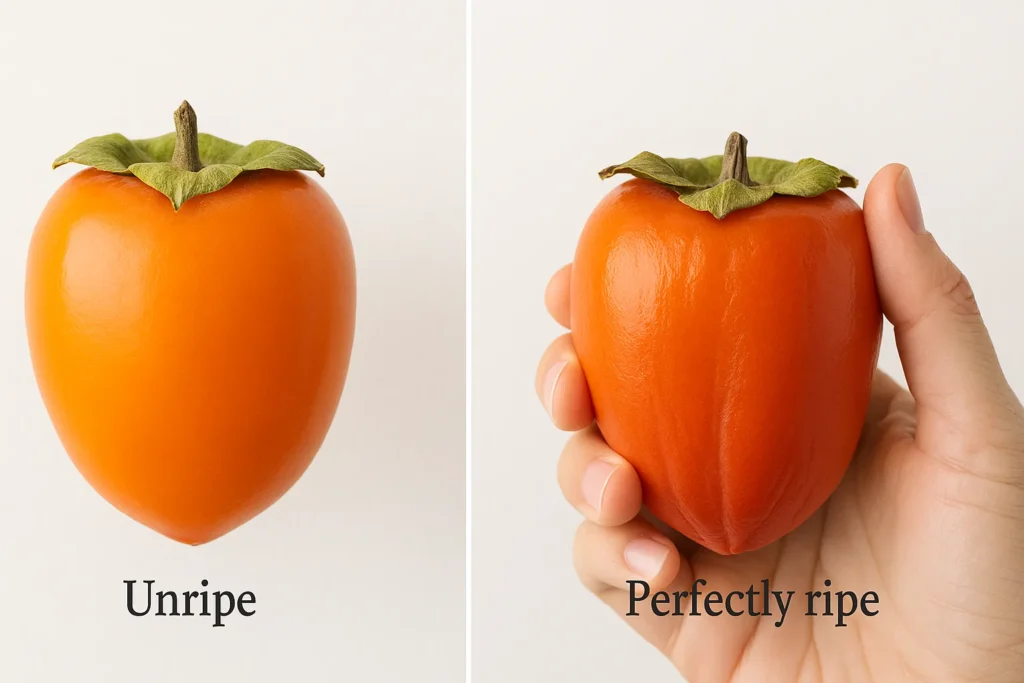
1. The Golden Rule: Wait for Ripeness
Never eat a Hachiya persimmon while it is firm. It should feel like a water balloon about to burst. If you buy them hard, place them on the counter with a banana or apple to speed up the ripening process.
2. Peel the Skin (For Astringent Types)
Most of the tannins in persimmons are concentrated in the skin. If you are sensitive to digestion issues or unsure about the variety, peeling the fruit is the safest option to reduce tannin intake significantly.
3. Don’t Eat on an Empty Stomach
Stomach acid levels are higher when your stomach is empty, which increases the chance of tannins reacting and causing discomfort. It is best to enjoy persimmons as a dessert after a meal rather than as a standalone breakfast on an empty stomach.
4. Avoid High-Protein Pairings
Since tannins bind to proteins, some traditional advice suggests avoiding eating persimmons immediately after a high-protein meal (like crab, seafood, or heavy meats) to prevent indigestion, although this varies from person to person.
Common Questions
Q: Is persimmon bad for gastritis or acid reflux?
A: Ripe, sweet Fuyu persimmons are generally safe and have low acidity. However, because tannins can slow down digestion, people with severe gastritis or GERD should consume them in moderation and strictly avoid unripe fruit.
Q: What should I do if I ate an unripe persimmon?
A: If your mouth feels dry and “fuzzy,” don’t panic. The sensation will pass. Drink water or milk to help wash away the tannins. If you experience stomach pain, stick to light, easily digestible foods for the rest of the day.
Q: Can eating too many persimmons be dangerous?
A: Yes. Even ripe persimmons contain fiber and tannins. Eating 5 or 6 in one sitting puts a heavy load on your digestive system. Stick to one or two fruits per day.
Final Bite of Wisdom
Persimmons are a delicious winter superfood, but they demand a little respect. The vast majority of “persimmon stomach aches” come from simply eating the wrong type at the wrong time. By choosing ripe fruit and listening to your body, you can enjoy all the benefits without any of the risks.
Want to know more? For a complete breakdown of types, nutrition facts, and delicious recipes, read our Ultimate Persimmon Fruit Guide: Benefits & Types.